What Is GEO (Generative Engine Optimization)? And Why It’s Replacing SEO
A few years ago, if you wanted to know which laptop to buy, you’d Google it, click through four or five review sites, and eventually make a decision.
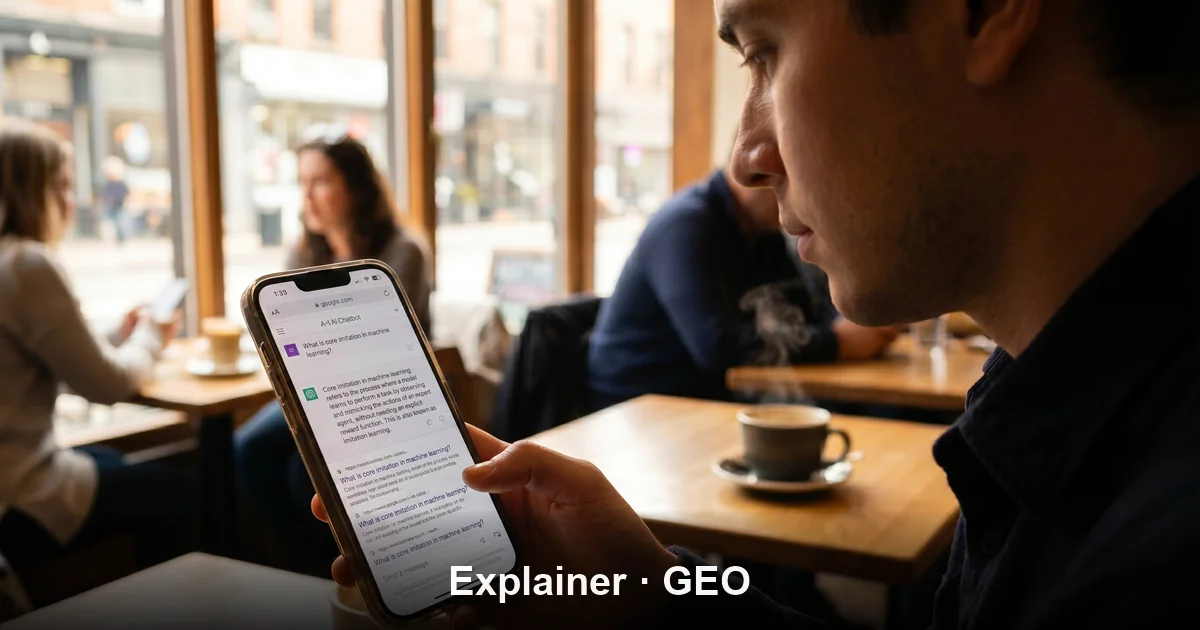
Today, more and more people just ask ChatGPT, Perplexity, or Gemini – and get a direct answer with a recommendation. They never click a single link.
For businesses and content creators, this is a fundamental shift. SEO – getting to the top of Google’s search results – built entire industries. Now a new skill is emerging: GEO. Getting cited and recommended by AI systems instead.
This guide explains what GEO is, how it differs from SEO, and what you can actually do to make your content show up in AI answers.
How AI Search Is Different From Google
Google shows you a list of links. You choose which one to click. The website gets traffic. That’s the model SEO was built around.
AI search is different. When you ask Perplexity “What’s the best project management tool for small teams?”, it gives you a synthesized answer – usually a few paragraphs with inline citations. You might click one of those citations, or you might just take the answer and leave.
The implication: your content either gets woven into the AI’s answer, or it doesn’t exist for that user. There’s no “position 4” anymore. You’re either in the answer or you’re not.
What Makes Content Get Cited by AI?
This is where GEO gets practical. Researchers and practitioners have identified several factors that make content more likely to appear in AI-generated answers:
Factual accuracy and specificity. AI systems favor content with concrete facts, numbers, and specific claims over vague generalities. “Teams using project management tools report 23% faster project completion” beats “project management tools can improve efficiency.”
Clear structure. AI pulls information more easily from well-organized content with clear headings, short paragraphs, and defined answers to specific questions. Content that directly answers “what is X” and “how does X work” tends to get cited more.
Original research and data. If your site publishes original statistics or studies, AI is much more likely to cite you. You become a primary source.
Authority signals. Domain age, backlinks, author credentials, and being cited by other trusted sources all still matter – the same signals that mattered for Google still influence which sources AI trusts.
Freshness. AI systems, especially those with web access like Perplexity, favor recent content. Keeping your pages updated matters more than ever.
Is SEO Dead?
No – but it’s changing. Google still processes billions of searches daily and still shows links. SEO still matters. But the growth is in AI search, and the rules are shifting.
The smartest approach in 2026 is to think about both: write content that ranks in Google and gets cited by AI. These goals are more aligned than they appear. Both reward high-quality, specific, well-structured, trustworthy content.
The main difference: SEO optimizes for keywords and backlinks. GEO optimizes for being the most citable, most trustworthy answer to a question.
Three Things You Can Do Today
If you create content – for a blog, a business website, or anything else – here are three concrete steps:
1. Answer questions directly. Structure your content around specific questions your audience has. “What is X?”, “How does X work?”, “What’s the difference between X and Y?” Direct answers get cited.
2. Add original data. Even a small survey of your own customers or a compilation of publicly available statistics makes your content more citable. Numbers get quoted.
3. Keep content updated. Add a “Last updated” date to your key pages and review them regularly. AI tools with web access favor fresh information.
GEO is still early. The rules aren’t fully established and they’ll keep evolving as AI search matures. But the fundamentals – be accurate, be specific, be trustworthy – are unlikely to change.
GEO vs. SEO: A Practical Comparison
If you’ve done any SEO work before, some of this will feel familiar. Some of it won’t. Here’s what changes and what stays the same.
What stays the same: Quality matters. Trustworthiness matters. Being the best answer to a specific question still wins. Backlinks and domain authority still influence which sources AI trusts. Technical basics – fast load times, clean HTML, mobile-friendly design – still matter.
What changes: Keyword density becomes less important. Ranking position 1 vs. position 4 becomes meaningless if AI just synthesizes an answer. Long, flowing prose optimized for reading time becomes less valuable than structured, quotable content. The goal shifts from “get the click” to “be the source.”
New priority: answer completeness. AI search rewards content that fully answers a question in one place. Comprehensive single-page answers beat multi-page experiences every time.
The Types of Content That Get Cited Most
Looking at which sources consistently appear in AI-generated answers reveals clear patterns.
Definition pages. Clean, direct definitions get cited constantly. If your site doesn’t have a clear definitional answer for your core topics, you’re missing the most basic GEO opportunity.
Comparison content. “X vs. Y” articles that fairly compare two options are heavily cited. “What’s the difference between Notion and Obsidian?” is a question Perplexity answers every day, pulling from comparison articles.
How-to guides with numbered steps. Step-by-step content is structurally perfect for AI citation. Each step is a discrete, citable fact.
Statistical roundups. Pages that compile current statistics – “X% of companies now use AI for Y” – are extremely citable. They’re reference material, and AI loves reference material.
Expert opinions with clear attribution. Content where named experts make specific claims gets treated as a quotable source rather than generic content.
The Role of E-E-A-T in AI Search
Google’s E-E-A-T framework (Experience, Expertise, Authoritativeness, Trustworthiness) turns out to be highly relevant for AI search too.
Experience means demonstrating first-hand knowledge. “I tested this tool for three weeks and here’s what I found” is more citable than “according to various sources, this tool is popular.”
Expertise means credible author profiles and demonstrated knowledge depth. AI systems read author bios. If your author page signals domain expertise, that matters.
Authoritativeness is largely about who links to you. If trusted publications reference your content, AI treats you as an authoritative source. This is the one area where traditional SEO and GEO fully overlap.
Trustworthiness means accuracy, citations, and consistency. Factual errors hurt you in AI search just like they do in Google. Accuracy is both ethically right and strategically smart.
What to Do This Week
GEO can feel overwhelming because the rules keep evolving. Here’s a simple plan to start making progress.
Pick your three most important pages. For each one, write down the exact question it’s supposed to answer. Then ask ChatGPT, Perplexity, and Google’s AI Overview that question. See if your site appears. Note what source is appearing instead – that’s your benchmark.
Next: add a clear one or two sentence definition at the top of each page. Find one statistic you can add from your own experience or public data. Add a last-updated date. Review for accuracy.
Repeat monthly. It’s not glamorous. But it’s exactly what separates sites that appear in AI answers from those that don’t. The window to get ahead of this is open right now. Most businesses haven’t started yet.
The parallel to the early days of SEO is striking. In 2003, most businesses ignored Google optimization entirely. By 2010, it was table stakes. GEO is at the 2003 stage right now. The businesses that start paying attention today will have a meaningful head start when AI search becomes the default for most queries – which, based on current growth rates, is closer than most people think.
How to Measure Whether Your GEO Is Working
One challenge with GEO is that traditional SEO metrics don’t tell the full story. Organic traffic can decline even if your content is being cited heavily in AI answers – because users are getting the answer without clicking through. So how do you actually measure progress?
Direct citation tracking. Regularly search for your core topics in Perplexity, ChatGPT (with web browsing), and Google’s AI Overview. Keep a simple spreadsheet: topic, date, whether your site was cited. Track this monthly. Positive trend over time means your GEO is working.
Brand mentions in AI outputs. Even when your URL isn’t linked, AI might mention your brand name or reference your content. Search for your brand name in AI tools and see how it comes up. This is a leading indicator of growing authority.
Referral traffic from AI tools. Perplexity, in particular, does send traffic to cited sources. In Google Analytics, check your referral traffic for ai.com, perplexity.ai, and other AI search tools. This is concrete evidence that AI is sending people to your site.
Engagement quality. Users coming from AI search tend to have high intent – they’ve already received a summary answer and want more detail. Track time on page and conversion rates for AI referral traffic. If quality is high, that’s a signal your content is being cited for the right reasons.
GEO metrics are still evolving. There’s no standard dashboard yet. But the brands that start measuring now will have baseline data that becomes invaluable as AI search matures.
Sources & Further Reading
Want to go deeper? Our next guide shows you the specific strategies content creators are using to appear in AI search results in 2026.