How to Use AI to Give Constructive Feedback with Clarity and Confidence
You are staring at a blinking cursor. A colleague missed a critical project deadline for the third time this quarter. You know you need to address the issue. You type a sentence. You delete it. You type another sentence. It sounds far too aggressive. You delete it again. You attempt to soften the language, and suddenly the message becomes so vague that the actual problem is completely buried. You close your laptop and decide to deal with it tomorrow.
Tomorrow rarely comes. The project suffers. The resentment builds. The working relationship quietly deteriorates.
Giving constructive feedback is universally acknowledged as one of the most difficult elements of professional life. Human beings are biologically wired to avoid interpersonal conflict. We fear that honesty will destroy trust. We worry that a direct critique will be interpreted as a personal attack. This paralysis costs organizations millions of dollars in lost productivity and creates deeply toxic, passive-aggressive work environments.
Generative artificial intelligence cannot have this difficult conversation for you. It cannot replace the necessary human empathy required to manage a team. However, it functions as an unparalleled emotional cooling chamber. It acts as an objective translator. It takes your raw, frustrated, or anxious thoughts and structures them into a clear, diplomatic framework. You are not outsourcing your management responsibilities to a machine. You are using a tool to clear the psychological friction that prevents you from communicating effectively.
In a Nutshell: Clarity Over Noise
Most professional feedback fails because it is either too vague to be useful or too blunt to be absorbed. Artificial intelligence solves this exact structural problem. By feeding a language model your raw intent, factual observations, and desired outcomes, you can generate a diplomatic, highly actionable draft. AI removes the emotional static from your communication. It allows you to deliver necessary critiques upward to managers, downward to subordinates, and laterally to peers without destroying the underlying human relationship. The machine drafts the structure. You provide the truth.
The Emotional Tax of Professional Communication
To understand why artificial intelligence is so effective at drafting feedback, we must first analyze why humans are so terrible at it.
When we prepare to criticize someone, our bodies often register the upcoming conversation as a physical threat. Adrenaline spikes. We enter a state of fight or flight. In the workplace, the “flight” response usually takes the form of the dreaded feedback sandwich. You offer a hollow compliment. You quickly whisper the actual criticism. You immediately follow it up with another hollow compliment. The recipient walks away completely confused about what they are actually supposed to fix.
The “fight” response is equally destructive. Frustration boils over. You send a blunt, highly emotional message that attacks the person rather than the process. The recipient becomes instantly defensive. The opportunity for growth is permanently lost.
A language model has zero adrenaline. It does not fear awkwardness. It does not care if the recipient likes it. It simply processes the logical parameters you provide and arranges words to meet those parameters. This absolute neutrality is its greatest feature.
The Goal-First Prompting Framework
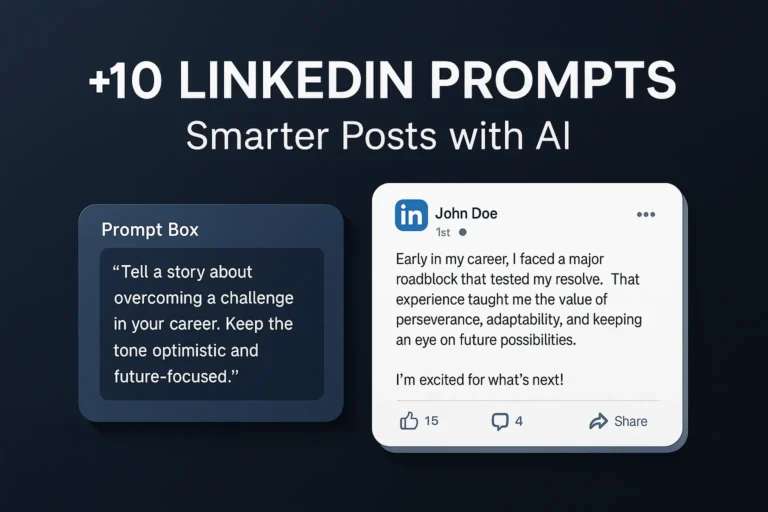
If you open a chat window and type “make this feedback sound nicer,” you will receive a terrible result. The AI will output a corporate, sycophantic paragraph filled with buzzwords that sounds entirely fake. Your colleagues will know immediately that a robot wrote it.
To generate authentic feedback, you must adopt the Goal-First Framework. You must explicitly define your intention. Are you trying to coach an underperforming employee? Are you trying to establish a firm boundary with a peer? Are you trying to respectfully correct a senior executive? The machine needs to know the exact power dynamic and the ultimate goal before it can select the correct vocabulary.
| The Raw Thought | The Bad Prompt | The Master Prompt |
|---|---|---|
| “You are always late and you are ruining the project timeline.” | “Write a nice message telling John he is late again.” | “Draft feedback for a peer regarding missed deadlines. Tone must be collaborative but firm. Focus on the impact the delay has on the wider team. Ask for a solution.” |
| “Your instructions are terrible and I do not know what to do.” | “Tell my boss her instructions make no sense politely.” | “Draft upward feedback for my manager. Tone must be respectful and proactive. State that I need more granular details during project kickoffs to ensure I meet her expectations.” |
| “This presentation is an absolute mess.” | “Make this critique sound professional.” | “Act as a senior mentor. Review this presentation feedback. Separate the critique into structural issues and design issues. Ensure the tone focuses purely on the work, not the person.” |
Navigating the Upward Feedback Minefield
Giving critical feedback to a subordinate is a standard management requirement. Giving critical feedback to the person who controls your salary is a career minefield.
Upward feedback is exceptionally rare because the risks are incredibly high. If your manager frequently changes the scope of a project at the last minute, you cannot simply demand they stop. You have to thread a nearly impossible linguistic needle. You must assert a professional boundary while displaying absolute deference to their authority.
This is where algorithmic drafting shines. You can instruct the machine to absorb your frustration and output pure, professional diplomacy. You focus entirely on shared goals rather than personal grievances.
The Leadership Alignment Prompt
Use this structure to address a bottleneck caused by a superior without triggering a defensive reaction.
Context: I need to write an email to my department director. She frequently changes project requirements two days before the final deadline. This forces the team to work weekends and lowers the quality of the final deliverable.Task: Draft a respectful, solution-oriented message. I want to suggest a mandatory "scope lock" phase one week before all future deadlines.
Constraints: The tone must be highly respectful and forward-looking. Do not sound accusatory. Frame this new process as a way to guarantee she gets the highest possible quality work from our team. Do not use corporate jargon.
The resulting text will not accuse the director of poor planning. It will align your request for stability directly with her desire for high-quality results. It removes the ego from the equation entirely.
Peer-to-Peer Interventions
Addressing a peer requires a completely different approach. You lack the authority of a manager. You lack the deference of a subordinate. You are equals. If you use language that sounds too authoritative, your colleague will instantly resent you. If you use language that is too passive, they will ignore you.
Peer feedback must be rooted in mutual reliance. The focus must remain strictly on how their specific actions impact the shared workflow. You can use the AI to identify and remove any language that implies a hierarchy.
The Lateral Adjustment Prompt
Use this to address a peer who is dropping the ball without sounding like you are trying to be their boss.
Context: A colleague in the marketing department consistently sends me raw data files format incorrectly. I have to spend two hours fixing his formatting before I can do my actual analysis job.Task: Draft a direct but collaborative Slack message. Ask him to review the formatting guidelines before sending the next batch.
Constraints: Do not sound condescending. Emphasize that my goal is to process his data faster so his campaigns can launch on time. Keep it under four sentences. Make it sound casual but firm.
The Eradication of Corporate Speak
There is a massive danger in using artificial intelligence for professional communication. Generative models have a default writing style that is incredibly obvious. If you are not careful, the machine will output a message filled with words like “delve,” “testament,” “foster,” and “synergy.”
Nothing destroys the impact of constructive feedback faster than the realization that it was generated by a machine. It signals to the recipient that you did not care enough about their career to write the message yourself. It feels deeply insulting.
You must actively fight the model’s default tone. You do this by utilizing heavy negative constraints. When you input your prompt, you must dedicate an entire sentence to telling the machine exactly what words to avoid. Instruct it to write at an eighth-grade reading level. Tell it to use active voice. Demand that it strips out all corporate idioms. The goal is to produce a draft that sounds like a busy, competent human being speaking plainly in a hallway.
The Three-Step Self-Check Matrix
The AI will give you a draft. You must never copy and paste this draft directly into your email client. You must treat the output as a rough architectural blueprint. Before you send any piece of digitally assisted feedback, you must run it through a rigorous three-step verification process.
- Is it explicitly specific? Does the message point to a tangible event, a specific document, or a measurable metric? If the AI generated a sentence like “You need to improve your communication,” you must manually rewrite it to say “In Tuesday’s client meeting, you interrupted the lead engineer three times.” Vague feedback is useless feedback.
- Is it highly actionable? Does the recipient know exactly what they need to do differently tomorrow morning? The message must contain a clear, realistic path forward. If the solution is not obvious, the feedback is incomplete.
- Is it radically authentic? Read the final draft out loud. Does it sound like words you would actually say? If you would never use the phrase “I value your continuous dedication to our overarching objectives,” delete it immediately. Replace it with your actual speaking voice.
The Honest Recommendation
We avoid difficult conversations because we fear the emotional fallout. We let poor performance slide. We let toxic habits solidify. We prioritize temporary comfort over long-term growth.
Artificial intelligence completely removes the excuse of not knowing how to say it. It handles the structural heavy lifting of diplomacy. It finds the exact phrase to soften a harsh truth without obscuring the core message. But it cannot replace your moral obligation as a professional. You must still look your colleague in the eye. You must still take ownership of the critique. Use the technology to draft the words. Use your humanity to deliver the message.
Frequently Asked Questions
? Is it unethical to use AI to write a performance review?
It is entirely unethical if you use the AI to invent observations or if you blindly copy the output without reviewing it. It is perfectly ethical to use the AI as a structural editor to organize your genuine, fact-based observations into a professional, coherent document.
? How do I prevent the feedback from sounding like a robot wrote it?
You must enforce negative constraints in your prompt. Explicitly instruct the model to avoid corporate jargon, passive voice, and complex vocabulary. Treat the AI output as a rough draft and manually inject your natural conversational idioms before sending.
? Can I use AI to respond to unfair criticism I received?
Yes. This is one of its best use cases. When you receive unfair criticism, your immediate reaction is usually defensive and emotional. Feeding the critique into an AI and asking it to draft a calm, fact-based, objective reply prevents you from escalating the conflict unnecessarily.
“`