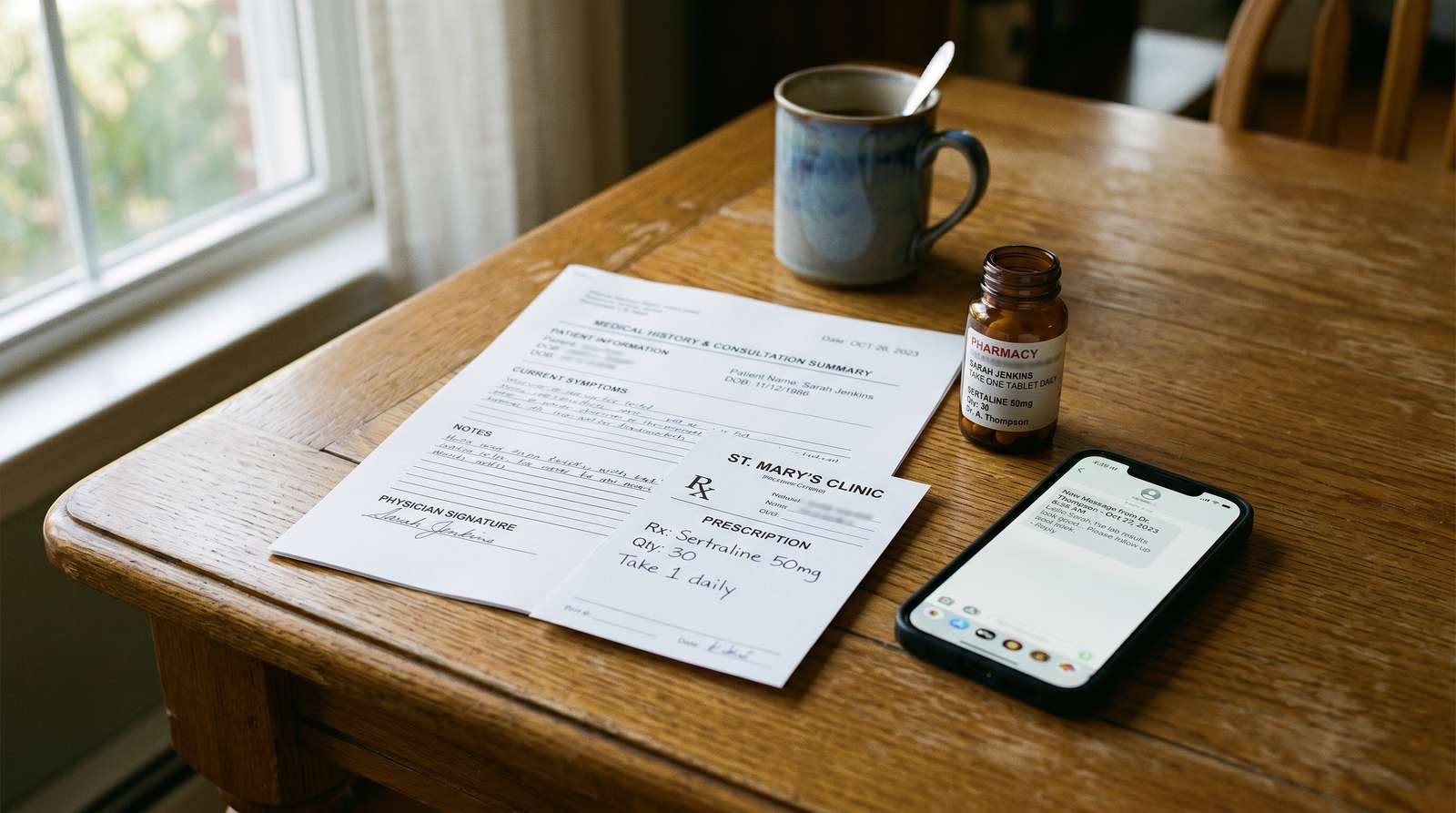
AI for Health Questions: What It Can Help With and What It Can’t
The modern healthcare experience is deeply alienating. You sit in a sterile room waiting for forty-five minutes. The physician finally walks in, clicks a mouse, and delivers a dense monologue about your body. You nod. You pretend you understand the implications. You leave the building clutching a piece of paper printed with billing codes and Latin derivatives. Panic inevitably sets in the moment you sit alone in your car.
This is the reality of the medical information gap. Doctors simply do not have the time to be educators. They operate as diagnosticians working on a relentless conveyor belt. Generative AI steps directly into this massive void. It is not a robotic doctor. It is a tireless, endlessly patient medical translator. It gives you the power to decode your own health data without falling into the terrifying abyss of a standard internet search.
When you type a symptom into a traditional search engine, the algorithm prioritizes engagement. Fear drives engagement. Therefore, a mild headache translates to a brain tumor within three clicks. AI operates differently. It synthesizes information, strips away the panic, and delivers clinical context in plain language. You use it to regain agency over your own healthcare.
In a Nutshell: Clarity Over Noise
Generative AI serves as a powerful bridge between clinical medical practice and everyday patient understanding. You can use it to translate dense radiology reports, decode intimidating blood panel results, and filter the legal jargon out of medication leaflets. More importantly, it helps structure your thoughts and symptoms before you step into an exam room, maximizing your limited time with a physician. AI eliminates the panic of a blind internet search by providing grounded context. However, it is a tool for health literacy, not clinical diagnosis. You must never use it to replace a human doctor.
The Anatomy of Medical Jargon
Physicians speak a highly specialized language for a good reason. Clinical precision matters. To a doctor, “erythema” is far more precise than “redness.” “Idiopathic” is a highly specific way of saying “we have absolutely no idea what is causing this.” This vocabulary protects patients by ensuring exact communication between specialists. Yet, for the patient reading their own chart, this exactness creates a wall of fear.
We often assume the worst when we do not understand a term. A chart note mentioning a “benign neoplasm” sounds like a death sentence if you do not know that “benign” means harmless and “neoplasm” just means a new growth, like a standard mole. AI breaks this wall down immediately.
You can take an entire block of text from your patient portal and feed it to the machine. You do not need to ask it for a diagnosis. You ask it for a translation.
Example Prompt:
“I just received the results of my lumbar spine MRI. The report mentions ‘mild bilateral facet arthropathy at L4-L5’ and ‘trace retrolisthesis.’ I am terrified this means I need spinal surgery. Break down these exact terms into simple, everyday English. Explain what these physical changes look like mechanically in the body, and tell me if these are typical findings for a 55-year-old adult who works at a desk.”
The response you get will immediately lower your heart rate. The AI will explain that facet arthropathy is essentially standard joint wear-and-tear. It will contextualize the findings. It turns a terrifying medical document into a boring, manageable reality of aging. You stop panicking. You start planning practical questions for your follow-up visit.
Reclaiming the Ten-Minute Window
The power dynamic of a medical exam room is inherently stacked against you. You are sitting in an uncomfortable chair or a paper gown. The doctor is standing, wearing a white coat, with their hand on the door handle. You have exactly ten minutes to explain a complex physical issue you have been experiencing for six months. Your mind goes blank.
You end up rambling. You mention a minor detail and forget the major symptom. The doctor latches onto the wrong piece of information. The visit ends, and you feel unheard.
Doctors appreciate structured, chronological information. They are trained to look for patterns. AI is incredibly effective at helping you build a clinical narrative before you ever leave your house. You can dump your messy, emotional thoughts into the chat and ask it to organize them for a medical professional.
Example Prompt:
“I have a doctor’s appointment tomorrow for chronic stomach pain. I have been dealing with this for four months. It usually happens after lunch, it feels like a sharp burning, I sometimes get dizzy, and antacids do not help at all. I am very anxious and I know I will forget things when the doctor rushes me. Take my messy symptoms and format them into a highly organized, bulleted list. Group them by timeline, severity, and triggers. Also, give me the three most important questions I need to ask before the doctor leaves the room.”
You print that list. You hand it to the doctor or read directly from it. You have instantly bypassed the anxiety of the waiting room. You provide the physician with exactly the kind of structured data they need to make an accurate diagnostic decision. AI does not make you your own doctor. It makes you a highly competent patient.
Decoding the Pharmaceutical Legal Shield
Modern pharmacology is a miracle. The way we communicate about it is a disaster. When you pick up a new prescription from the pharmacy, it comes with a folded insert of paper. The print is microscopic. The text is dense. It lists every single adverse event ever recorded during a decade of clinical trials.
This document is not actually written for you. It is written by corporate lawyers to shield the pharmaceutical company from liability. It will casually list “sudden death” right next to “mild dry mouth.” It offers zero context regarding statistical probability.
You stare at the paper. You decide the pills are poison. You refuse to take the medication your doctor prescribed to prevent a stroke. This lack of context costs lives.
AI models are trained on vast amounts of pharmacological data and statistical studies. You can use them to filter out the legal noise and extract the practical daily reality of taking a specific drug.
Example Prompt:
“My cardiologist just prescribed me Atorvastatin 40mg. The warning label is terrifying. I need a grounded, realistic summary. What are the actual statistical odds of experiencing severe muscle pain? What are the three most common side effects people actually complain about in the real world? Are there any specific foods, like grapefruit, or over-the-counter supplements I absolutely must avoid while taking this?”
The AI will give you the actual numbers. It will explain that severe muscle degradation is exceptionally rare, while a mild upset stomach in the first week is common. It gives you the confidence to start a necessary treatment while knowing exactly what realistic warning signs to watch out for.
Navigating Wearable Data Anxiety
We are currently living in an era of unprecedented self-surveillance. You wear a smart ring on your finger. You strap a heavy watch to your wrist. Every morning, an application grades your sleep. Throughout the day, your phone alerts you to changes in your resting heart rate, your blood oxygen saturation, and your heart rate variability.
We possess massive streams of clinical data, yet we have absolutely no medical training to interpret it. This creates a modern psychological condition where healthy people become obsessed with minor fluctuations in their biometric metrics. A low sleep score ruins your morning. A slight dip in HRV convinces you that you are falling severely ill.
AI is the perfect counterbalance to wearable anxiety. Instead of letting a red number on a screen dictate your mood, you can ask the AI to explain the underlying physiology of the metric. You can learn why a heavy meal eaten too close to bedtime crashes your heart rate variability. You learn that blood oxygen sensors on wrists are notoriously inaccurate if you sleep on your arm awkwardly. You gain context. The data stops being a daily judgment and becomes a neutral tool for gentle lifestyle correction.
The Honest Recommendation
The healthcare system is overwhelmed. Doctors are operating under immense corporate and temporal pressure. You cannot change the system, but you can change how you interact with it. Stop being a passive recipient of confusing medical data.
Use generative AI to slow the process down. Translate the jargon until it makes sense to you. Prepare your symptom narrative before you sit in the waiting room. Understand the realistic side effects of your medication without the legal panic. Treat AI as your private medical tutor. It empowers you to sit across from your doctor not as a confused subordinate, but as an informed partner in your own health.
For more deep dives into integrating automation into your routine, read our core guide: AI in Everyday Life: How to Use AI for the Things You Do Every Day.
Frequently Asked Questions
? Is it a violation of privacy to type my medical data into ChatGPT?
Yes, if you include identifying information. Public AI models may use conversation data for future training. You should never upload documents containing your name, address, social security number, or hospital identification numbers. Keep your prompts strictly focused on the medical terms and symptoms. Ask about “a 40-year-old male with an elevated AST liver enzyme,” rather than uploading your personal lab sheet.
? Can an AI read and interpret a picture of an X-ray or MRI scan?
Modern multimodal AI can analyze images, but you must never rely on it for radiological diagnostics. Shadows, artifacts, and image compression can easily cause the AI to hallucinate a tumor or miss a fracture entirely. Always rely on the written report provided by a board-certified radiologist. You can use the AI to translate the text of that report, but never the raw image itself.
? Does the AI pull from reliable, peer-reviewed medical sources?
Frontier models are trained on vast repositories of medical literature, including textbooks and verified clinical journals. However, to ensure maximum safety, you should explicitly instruct the AI in your prompt to “only use information from official government health agencies or verified, peer-reviewed medical journals.” This drastically reduces the chance of it pulling data from holistic blogs or unverified wellness websites.
? How can I be sure the AI is not hallucinating medical facts?
You can never be entirely sure. This is the fundamental limit of current AI technology. If an explanation sounds strange or contradicts what your doctor told you, always defer to the doctor. You can also force the AI to prove its claims by using models with live web access and demanding clickable source links to recognized medical institutions like the Mayo Clinic or the NHS.