Can You Use ChatGPT Without Logging In? In the EU, Mostly Not
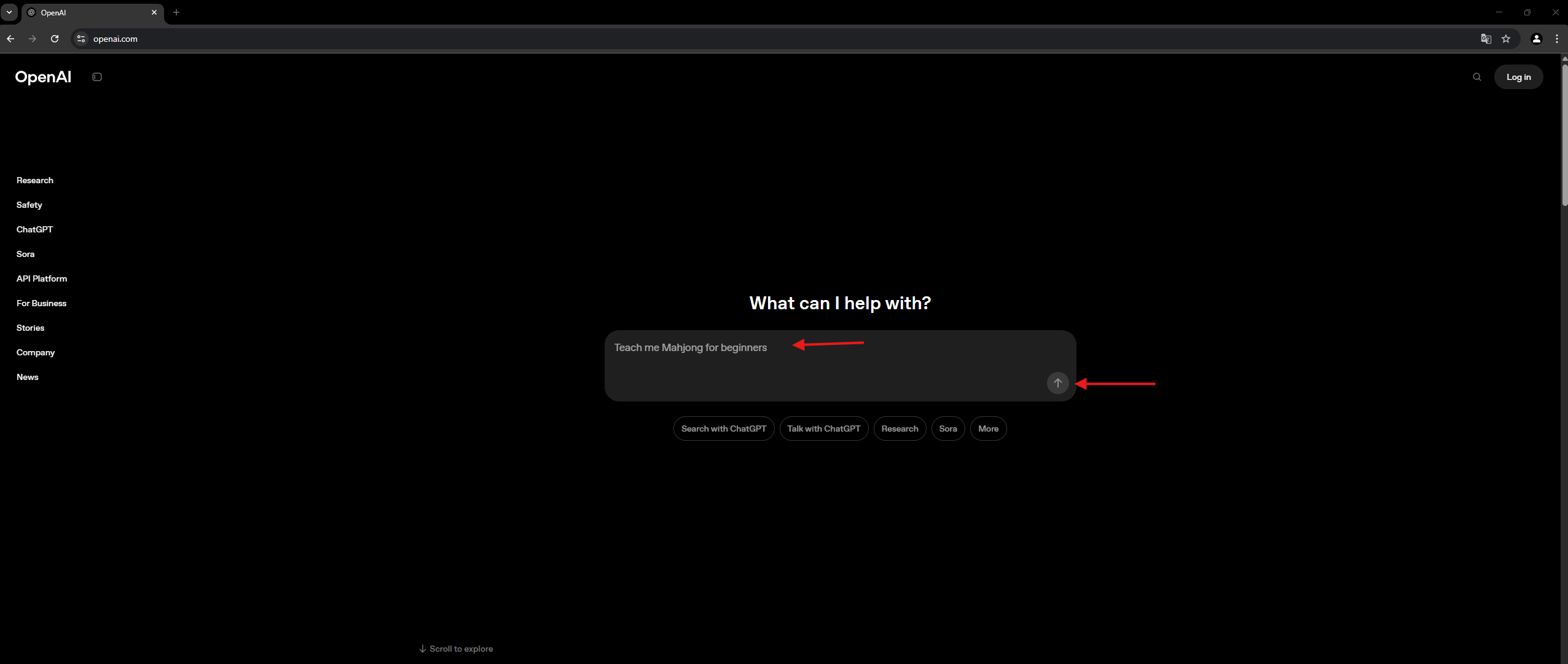
If you are in the European Union, the honest answer is that you probably cannot. OpenAI’s own help pages state that using ChatGPT before creating an account is not yet available for users in Europe, with the United Kingdom as the exception. Plenty of guides still tell you to open the page and start typing. In most of the EU you will be asked to sign up first.
So this article does two things. It sets out what logged out access actually gives you where it does work, including one detail about training that is worth knowing before you type anything. Then it covers the part that decides whether your first session is any good, which applies whether you sign in or not.
What logged out access is, and where it works
The address to use is chatgpt.com. The older chat.openai.com still works and forwards you there, which is why so many older guides still appear to be correct.
Where signed out access is available, OpenAI describes three limits plainly:
Chat history is not saved. Conversations stay available only for the current session in the same browser.
You can have only one conversation at a time.
By default, chats are used to train the models. There is a setting to turn that off, but it is tied to your browser and resets if you clear cookies or switch browser or device.
That last point deserves a moment. Being signed out feels more private than being signed in, and in one narrow sense it is, since nothing is attached to an account you own. For training, the default runs the other way, and the opt out is the kind that quietly disappears when you clear your cookies.
Practically: use signed out access to find out whether the tool is useful to you. Do not use it for anything you would not want kept, and copy out anything you want before you close the tab.
The five things that make a first session disappointing
Most people who conclude that these tools are overrated hit the same handful of problems in their first hour. None of them are the model being weak.
1. A question so short it could mean anything
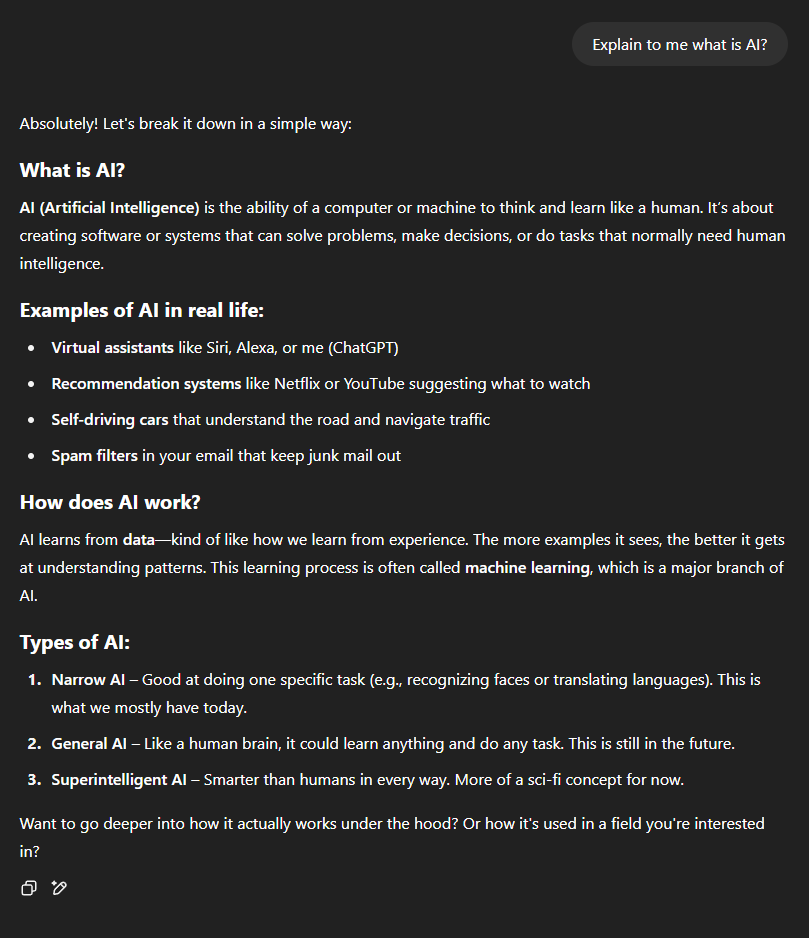
The classic first prompt is two or three words. Write a poem. Marketing ideas. Explain quantum computing. What comes back is bland, and the natural conclusion is that the tool is bland.
What happened is that a question with a thousand valid answers produced roughly the average of them. Nothing in “explain quantum computing” says whether you want two paragraphs or two pages, or that the last physics you did was at school.
The fix is not longer prompts as such. It is supplying the three things the model cannot guess: who the answer is for, how long it should be, and what you plan to do with it.
2. Treating the first answer as the answer
In a search engine the first page of results is the product. In a chat window it is a draft. The second and third turns are where most of the value is, and the interface does nothing to suggest that, because it looks like a search box.
The useful follow ups are unglamorous. Shorter. Drop the introduction. Give me the version someone sceptical would write. Now as five bullet points I can paste into an email.
3. Asking about the present without switching search on
Answering from training data, a model will state prices, product versions and who currently holds a job in the same even tone it uses for arithmetic. Some of it will be out of date and the tone will not tell you which parts.
If your question has a current answer, look for the web search option. Signed out access to web search has been available for some time, so this is not only for account holders.
One caveat about links, because it is easy to draw the wrong conclusion from them. A link tells you a page exists. It does not tell you that the page says what the answer claims it says. Citations that do not support the sentence they are attached to are a documented weakness of AI search products, so if the claim matters, open the link and read it.
4. Not saying who you are
Two people ask the same question about a rental contract. One is the tenant and one is the landlord. Identical words, and the useful answer is different in each case.
One clause about your situation, your level of knowledge or what you are trying to achieve reshapes the whole reply. It is also the thing people leave out most often, because in a search box that information would be dead weight.
5. Reading agreement as confirmation
Push back on an answer and the model will often revise it. Sometimes that is a genuine correction. Sometimes it abandons a position that was right, because agreement is a strong pull in how these systems are trained, and researchers have a name for it: sycophancy.
Both directions happen, which is why agreement is weak evidence rather than none. If you want a real test, ask for the strongest case against your position before you say what you think. Or open a new conversation and put the question without revealing which side you are on.
OpenAI, The ChatGPT home page, for signed out availability outside Europe with the UK excepted, the absence of saved history, the single conversation limit, and the training default with its browser bound opt out. The redirect from chat.openai.com to chatgpt.com was checked directly on the same date. Availability rules change, so treat this as a reading on a date rather than a permanent state.